What is a Toroidal Transformer?
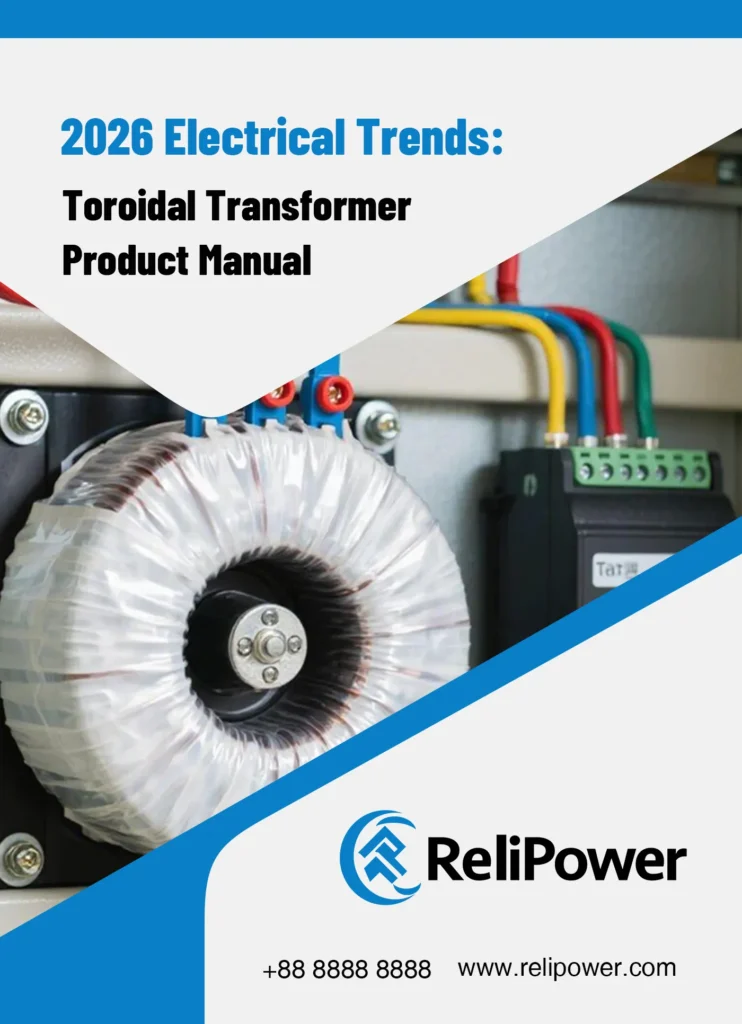
If you’ve ever peeked inside high-end audio equipment, medical devices, or industrial power supplies, you might have noticed a distinctive, donut-shaped component. That’s a toroidal transformer—a special type of electrical transformer that offers significant advantages over traditional laminated transformers. But what exactly makes it different, and why is it preferred in so many critical applications? Let’s dive in.
The Basics: How Transformers Work
First, a quick refresher. A transformer is a passive electrical device that transfers energy between two or more circuits through electromagnetic induction. It typically consists of two coils of wire (the primary and secondary windings) wrapped around a magnetic core. By changing the number of turns in each coil, transformers can “step up” or “step down” voltage levels while keeping power (ideally) constant.
The Toroidal Design: A Donut with Benefits
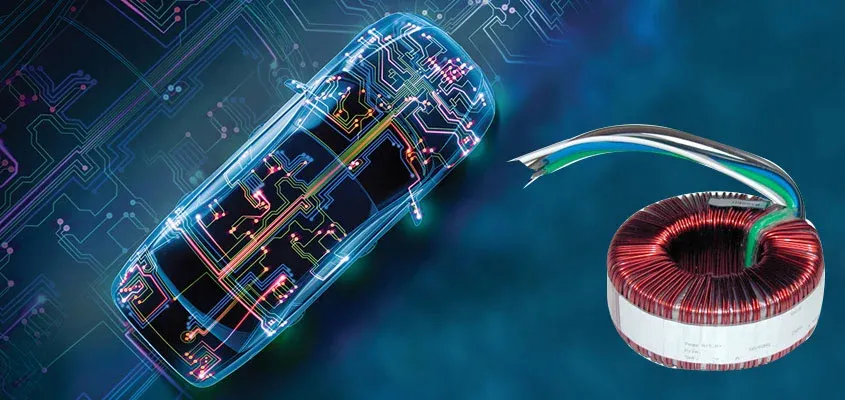
The word “toroidal” comes from “torus,” the geometric term for a donut shape. Unlike conventional transformers with stacked rectangular or E-shaped laminations, a toroidal transformer uses a core made from a continuous strip of grain-oriented silicon steel (or sometimes ferrite) wound into a tight ring. The copper windings are then wrapped uniformly around this ring.
This simple-sounding change in geometry delivers some remarkable benefits:
1. High Efficiency & Lower Losses
- The continuous, symmetrical core minimizes the “air gap” found in laminated cores, allowing for a more efficient magnetic path (higher magnetic flux). This means less energy is lost as heat (lower core losses).
- Efficiency rates often exceed 95%, making toroidal transformers ideal for energy-sensitive applications.
2. Compact and Lightweight
- Due to their efficient use of core material and copper, toroidal transformers can be up to 50% smaller and lighter than equivalently rated laminated transformers. This saves valuable space in modern, compact electronics.
3. Low Stray Magnetic Field
- The closed-loop core confines the magnetic field tightly within the transformer. This results in significantly lower electromagnetic interference (EMI), which is crucial for audio equipment (avoiding hum) and sensitive instrumentation.
4. Quiet Operation
- The absence of loose laminations and the reduced mechanical stress from the magnetic field means toroidal transformers vibrate much less. This leads to nearly silent operation—a must for high-fidelity audio and quiet environments.
5. Cooler Running
- Higher efficiency and better heat dissipation (due to the shape and often an enamel coating that transfers heat well) allow toroidal transformers to run cooler, enhancing reliability and longevity.
Where Are They Used?
Because of these advantages, toroidal transformers are the component of choice in:
- High-End Audio & Home Theater Systems: For clean, hum-free power.
- Medical Equipment: Where reliability and low EMI are critical.
- Industrial Controls & Automation: For robustness in demanding environments.
- Variable Frequency Drives (VFDs) and UPS Systems: Where efficiency and compact size matter.
- Lighting Systems: Including halogen and LED drivers.
- Laboratory & Test Equipment: Requiring precision and stability.