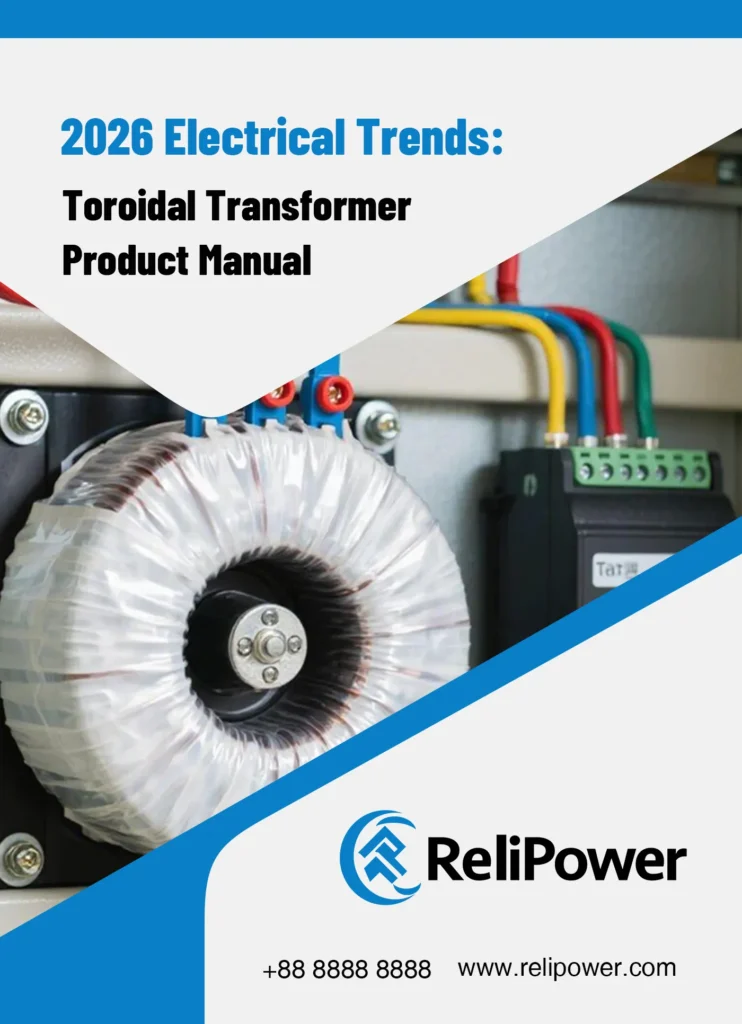

Why Choosing the Right Toroidal Transformer Matters
Selecting the wrong transformer wastes money and risks equipment damage. Undersized transformers overheat and fail prematurely. Oversized units cost more and waste space.
This guide walks you through the essential selection criteria. You’ll learn how to calculate power requirements accurately. You’ll understand quality indicators that separate reliable transformers from problematic ones.
Whether you’re building audio amplifiers, medical equipment, or industrial controls, these principles apply universally.
Step 1: Calculate Your Power Requirements (VA Rating)
Understanding VA vs Watts
VA (volt-ampere) represents apparent power. Watts measure real power. For resistive loads like heaters, they’re identical. For inductive loads like motors, VA exceeds watts.
Always use VA ratings for transformer sizing. This accounts for both real and reactive power.
How to Calculate Total VA Load
List every component the transformer will power. Add up their individual power requirements. Include voltage regulators, displays, motors, and control circuits.
Example calculation:
- Main circuit board: 50W at 12V
- LED indicators: 5W at 5V
- Cooling fan: 15W at 12V
- Control processor: 10W at 5V
- Total: 80W
Add Safety Margin
Never run transformers at 100% capacity. Add 20-30% overhead for reliability.
For the 80W example above: 80W × 1.25 = 100VA minimum rating.
Use 30% margin (1.3 multiplier) for systems with motors or heavy startup loads.
Consider Future Expansion
Will you add features later? Build in capacity now. Upgrading transformers later costs more than sizing correctly initially.
Step 2: Match Input and Output Voltage Specifications
Primary Voltage (Input Side)
Check your AC mains voltage carefully. Common options include:
- North America: 120VAC, 60Hz
- Europe/Asia: 230VAC, 50Hz
- Universal input: 100-240VAC (requires special windings)
Voltage tolerance matters. Mains voltage fluctuates ±10% typically. Choose transformers rated for your actual supply range.
Secondary Voltage (Output Side)
Determine exact voltage requirements for your circuits. Remember that transformer output voltage appears under load conditions.
No-load voltage runs 5-10% higher than rated voltage. Full-load voltage matches the rating. Factor this into your regulator design.
Multiple Secondary Windings
Need different voltages? Choose transformers with multiple secondary windings. Common configurations include:
- Dual 12V windings (center-tapped for ±12V supplies)
- 12V + 5V outputs
- Multiple isolated outputs for safety
Isolated windings prevent ground loops in audio equipment. They improve safety in medical applications.
Step 3: Determine Current Capacity
Calculating Required Current
Use Ohm’s Law: Current (A) = Power (W) ÷ Voltage (V)
Example:
- 50W circuit at 12V needs: 50W ÷ 12V = 4.17A minimum
Choose the next standard current rating above your calculated requirement. Standard ratings include 1A, 2A, 3A, 5A, 10A, 15A, 20A.
Peak vs Continuous Current
Continuous current rating indicates steady-state operation. Peak current handling matters for startup surges.
Motors and capacitive loads draw 5-10× normal current during startup. Verify the transformer handles inrush current without saturation.
Temperature Derating
Ambient temperature affects current capacity. Standard ratings assume 40°C ambient temperature.
Operating above 40°C requires derating. Reduce capacity by 2% per degree above 40°C. A 10A transformer at 50°C ambient safely handles only 8A continuous.
Step 4: Choose the Right Physical Size and Mounting
Size Considerations
Toroidal transformers come in standard outer diameters: 50mm, 68mm, 80mm, 90mm, 105mm, 120mm, 160mm, 200mm.
Larger diameters generally indicate higher power ratings. However, core thickness also affects capacity.
Measure Available Space
Record these critical dimensions:
- Maximum diameter your enclosure accommodates
- Height clearance (core thickness + mounting hardware)
- Minimum clearance to other components (25mm recommended)
Heat dissipation requires airflow. Don’t pack transformers too tightly.
Mounting Methods
Toroidal transformers use center-bolt mounting. The bolt passes through the core center.
Quality mounting includes:
- Rubber or silicone isolation washers (reduce vibration)
- Steel mounting plate (distributes stress)
- Lock washers (prevent loosening from vibration)
Never over-tighten the mounting bolt. This compresses the core and reduces efficiency. Follow manufacturer torque specifications.
Orientation Matters
Mount with the core axis vertical when possible. This allows natural convection cooling. Horizontal mounting works but may require forced cooling.
Step 5: Evaluate Build Quality and Materials
Core Material Types
Silicon steel (most common):
- Efficiency: 90-93%
- Cost: Moderate
- Good for general applications
Amorphous metal (premium):
- Efficiency: 95-97%
- Cost: High (30-50% more)
- Best for energy-critical applications
Permalloy (specialized):
- Ultra-low noise
- Cost: Very high
- Audio and medical applications
Winding Quality Indicators
Inspect the copper wire windings visually:
Good signs:
- Even, tight winding with no gaps
- Uniform layer thickness
- Clean, professional appearance
- Secure wire terminations
Warning signs:
- Loose or uneven windings
- Visible wire crossovers
- Damaged insulation
- Poor solder connections
Insulation Class
Insulation class indicates maximum safe operating temperature:
- Class A (105°C): Basic applications
- Class B (130°C): Standard industrial use
- Class F (155°C): Demanding environments
- Class H (180°C): Extreme conditions
Higher classes cost more but extend transformer lifespan.
Protection Features
Quality transformers include:
- Thermal fuses (prevent overheating damage)
- Impregnated windings (moisture resistance)
- Electrostatic shields (reduce EMI coupling)
These features matter for reliability and safety.
Step 6: Check Electrical Specifications and Performance
Regulation Percentage
Voltage regulation measures how much output voltage drops under load.
Formula: Regulation % = [(No-load voltage – Full-load voltage) ÷ Full-load voltage] × 100
Good regulation: 5-8% Acceptable regulation: 8-12%
Poor regulation: >12%
Better regulation means more stable output voltage. Critical applications need tight regulation.
Efficiency Rating
Transformer efficiency = (Output power ÷ Input power) × 100
Quality toroidal transformers achieve:
- Standard: 90-93% efficiency
- Premium: 93-95% efficiency
- Ultra-premium: 95-97% efficiency
Every percentage point matters in high-power applications. A 3% efficiency gain saves significant energy over years of operation.
Leakage Inductance
Low leakage inductance improves high-frequency response. This matters in:
- Audio amplifiers (better transient response)
- Switching power supplies (reduced ringing)
- RF applications (cleaner signals)
Toroidal designs inherently have lower leakage than EI transformers.
No-Load Current
Also called magnetizing current or idle current. Quality transformers draw minimal current when unloaded.
Typical values:
- Excellent: <50mA
- Good: 50-100mA
- Acceptable: 100-200mA
- Poor: >200mA
Lower no-load current reduces wasted energy and heat.
Step 7: Consider Certification and Safety Standards
Essential Certifications
UL Listed (North America): Product meets US/Canadian safety standards. Required for commercial products sold in North America.
CE Marked (Europe): Complies with EU safety, health, and environmental requirements. Mandatory for European market access.
RoHS Compliant: Restricts hazardous substances like lead and mercury. Required globally for most electronics.
Medical Standards (if applicable):
- IEC 60601-1 for medical equipment
- Enhanced isolation requirements
- Stricter leakage current limits
Safety Features to Verify
Isolation voltage rating: Primary-to-secondary isolation voltage indicates electrical safety. Common ratings:
- 1000VAC: Basic isolation
- 3000VAC: Reinforced isolation (medical/industrial)
- 4000VAC: Premium isolation
Creepage and clearance distances: Physical spacing between conductors ensures safety. Verify adequate spacing for your voltage levels.
Flammability rating:
- UL94 V-0: Best (self-extinguishing)
- UL94 V-1: Good
- UL94 V-2: Acceptable
Common Mistakes to Avoid
Mistake #1: Ignoring Frequency Specifications
Transformers designed for 50Hz don’t perform well at 60Hz and vice versa. Using 60Hz transformers on 50Hz systems increases core saturation and reduces efficiency.
Always verify frequency compatibility with your mains supply.
Mistake #2: Overlooking Inrush Current
Toroidal transformers exhibit high inrush current at power-on. This can:
- Trip circuit breakers
- Damage rectifier diodes
- Stress connected components
Solutions include:
- NTC thermistor circuits (limit inrush)
- Soft-start modules
- Properly rated circuit protection
Mistake #3: Inadequate Ventilation
Even efficient transformers generate heat. Inadequate cooling causes:
- Reduced lifespan
- Efficiency loss
- Safety hazards
Provide minimum 25mm clearance on all sides. Consider forced cooling above 200VA in enclosed spaces.
Mistake #4: Buying Based on Price Alone
Cheap transformers use inferior materials:
- Thinner wire (higher resistance losses)
- Lower grade core steel (less efficient)
- Minimal insulation (safety risk)
- Poor manufacturing quality
The cost difference between good and poor transformers is small. Reliability problems cost far more than initial savings.
Mistake #5: Wrong Wire Gauge Selection
Secondary wire gauge affects current capacity and efficiency. Undersized wire causes:
- Excessive voltage drop
- Heat buildup
- Fire hazard
Verify wire gauge matches current requirements with appropriate safety margin.
Premium vs Budget: What’s Worth Paying For?
Budget Transformers ($20-50)
- Basic silicon steel cores
- Standard efficiency (88-90%)
- Minimal protection features
- Good for: hobbyist projects, non-critical applications
Mid-Range Transformers ($50-150)
- Quality silicon steel or basic amorphous cores
- Higher efficiency (90-93%)
- Thermal protection included
- Good for: professional audio, industrial controls, small medical devices
Premium Transformers ($150-500+)
- High-grade amorphous metal cores
- Highest efficiency (93-97%)
- Multiple protection features
- Certified to strict standards
- Good for: medical equipment, precision instruments, high-end audio
When Premium Makes Sense:
- Mission-critical applications
- High operating hours (>4000 hours/year)
- Energy costs matter
- Harsh environments
- Safety-critical systems
When Budget Works:
- Prototyping and testing
- Low-duty-cycle applications
- Non-critical hobbyist projects
- Temporary installations
Top Brands and Where to Buy
Reputable Manufacturers:
Talema (Canada): Premium quality, excellent audio transformers. Strong certifications. Higher price point justified by reliability.
Toroid Corporation of Maryland (USA): Medical-grade transformers. Custom winding capabilities. Fast turnaround times.
Plitron (Canada): High-end audio transformers. Innovative designs. Used by premium audio manufacturers.
Nuvotem Talema (Europe): Wide product range. Good value proposition. Strong technical support.
Antek (USA): Budget-friendly options. Good for DIY audio projects. Adequate quality for non-critical use.
Where to Purchase:
Direct from manufacturers:
- Best for large orders (50+ units)
- Custom specifications available
- Longer lead times (6-12 weeks)
Electronics distributors:
- Mouser, Digikey, Newark (North America)
- RS Components, Farnell (Europe)
- Stock items ship quickly
- Good technical datasheets
Specialized audio suppliers:
- AnTek Inc, Tortech
- Pre-selected for audio performance
- Ready-made mounting hardware
Online marketplaces:
- eBay, Alibaba (use caution)
- Verify specifications carefully
- Check seller reputation
- Confirm certifications
Final Pre-Purchase Checklist
Before clicking “buy,” verify these critical points:
Power specifications:
- VA rating exceeds calculated load by 25-30%
- Primary voltage matches your mains exactly
- Secondary voltage(s) suit your requirements
- Current capacity handles peak loads
Physical requirements:
- Diameter fits available space with clearance
- Height accommodates mounting hardware
- Weight acceptable for mounting surface
- Mounting hardware included or specified
Quality factors:
- Efficiency meets your performance goals
- Core material appropriate for application
- Winding quality appears professional
- Insulation class suits environment
Safety and compliance:
- Required certifications present (UL, CE, etc.)
- Isolation voltage adequate for application
- Safety features included as needed
- RoHS compliant if required
Application fit:
- Frequency matches mains supply (50/60Hz)
- EMI level acceptable for sensitive circuits
- Operating temperature range suitable
- Warranty terms acceptable
Budget and delivery:
- Price within budget including shipping
- Lead time acceptable for project schedule
- Return policy reasonable
- Technical support available
Making Your Final Decision
Review your complete requirements against shortlisted options. Don’t rush the decision based on price alone.
Consider total cost of ownership:
- Initial purchase price
- Energy consumption over lifespan
- Replacement costs if it fails
- Downtime impact in critical systems
For most applications, mid-range quality offers the best value. Premium options make sense when reliability, efficiency, or certifications justify the cost.
When in doubt, consult the manufacturer’s technical support. Reputable companies help you select the right transformer for your specific needs.
Conclusion: Invest in Quality for Long-Term Success
The right toroidal transformer delivers years of reliable service. It protects your equipment and operates efficiently.
Poor transformer selection causes:
- Equipment damage from voltage problems
- Wasted energy from inefficiency
- Premature failures requiring replacement
- Safety hazards in extreme cases
Follow this systematic selection process. Calculate power requirements accurately. Verify all specifications match your needs. Choose reputable manufacturers and suppliers.
The small extra investment in quality pays dividends through reliability, efficiency, and peace of mind. Your project deserves a transformer that performs flawlessly for its entire service life.
Ready to buy? Use this guide as your reference. Check each specification carefully. Make an informed decision that ensures your project’s success.