
What Is a Toroidal Transformer?
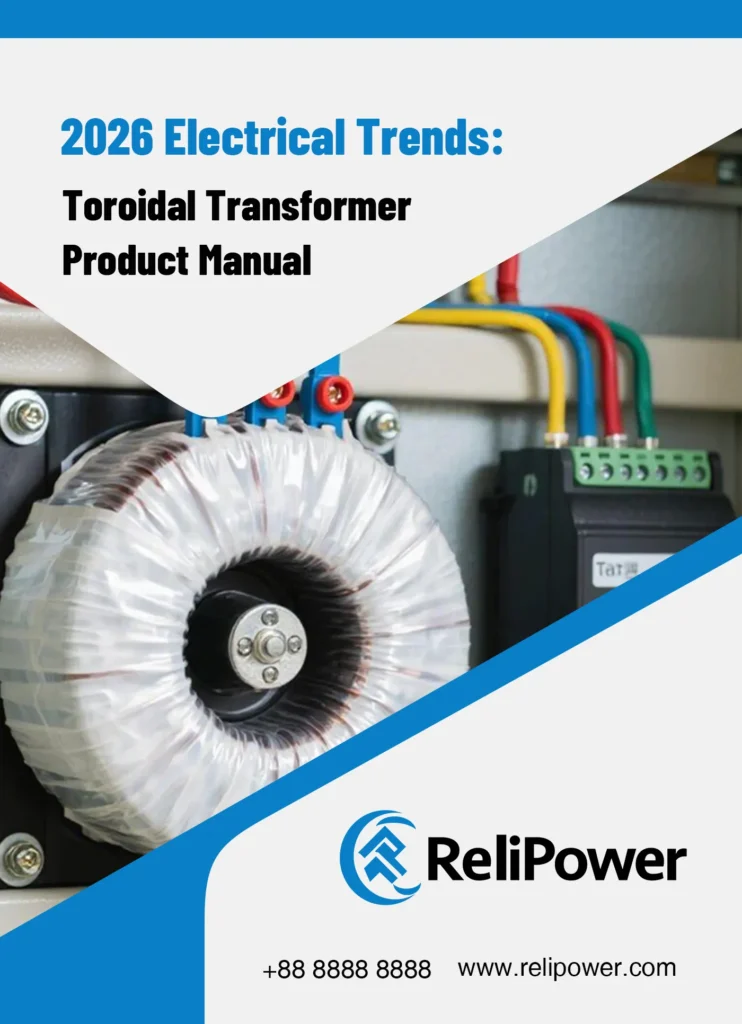
A toroidal transformer is a type of electrical transformer built around a ring-shaped (donut-shaped) magnetic core. Unlike traditional transformers with rectangular laminated cores, toroidal transformers feature windings wrapped around a continuous circular core.
The name comes from “toroid,” which means a doughnut or ring shape in geometry. This unique design offers significant advantages in efficiency, size, and electromagnetic interference reduction.
How Does a Toroidal Transformer Work?
The basic working principle remains the same as conventional transformers. It transfers electrical energy between circuits through electromagnetic induction.
Here’s the process:
The primary winding receives AC voltage. This creates a magnetic field in the toroidal core. The magnetic flux travels through the ring-shaped core. The secondary winding captures this changing magnetic field. It induces voltage in the secondary circuit.
The circular core design makes the magnetic path shorter and more efficient. The flux stays contained within the ring shape. This means less energy loss and better performance.
Key Advantages of Toroidal Transformers
Compact Size and Lightweight Design
Toroidal transformers are 50% smaller and 50% lighter than EI transformers of equivalent power rating. The efficient core design requires less material. This makes them ideal for space-constrained applications.
Higher Efficiency
Efficiency typically reaches 90-95% compared to 80-90% for conventional transformers. The continuous magnetic path reduces core losses. Less energy converts to heat. Your system runs cooler and more economically.
Low Electromagnetic Interference (EMI)
The self-shielding toroidal shape naturally contains magnetic fields. EMI drops to about 10% of traditional transformer levels. This protects sensitive nearby electronics. Audio equipment benefits especially from this feature.
Quiet Operation
Mechanical hum drops to nearly inaudible levels. The smooth core shape eliminates vibration points. The tight winding technique further reduces noise. This matters in audio equipment, medical devices, and quiet environments.
Lower Operating Temperature
Better efficiency means less wasted energy as heat. Toroidal transformers run 10-20°C cooler than equivalent EI types. Cooler operation extends component lifespan. It also improves safety and reliability.
Common Applications
High-End Audio Equipment
Audiophiles prefer toroidal transformers for amplifiers and receivers. The low noise and minimal EMI preserve sound quality. Premium audio brands like McIntosh and Mark Levinson use them extensively.
Medical Equipment
MRI machines, patient monitors, and diagnostic devices rely on toroidal transformers. The low EMI won’t interfere with sensitive medical sensors. Quiet operation matters in patient care environments.
Industrial Control Systems
CNC machines, robotics, and automation equipment use toroidal transformers. They provide stable, clean power for precision control circuits. The compact size fits tight equipment enclosures.
Renewable Energy Systems
Solar inverters and wind power systems incorporate toroidal designs. High efficiency maximizes energy conversion. Durability withstands harsh environmental conditions.
Laboratory and Test Equipment
Oscilloscopes, signal generators, and measurement devices need clean power. Toroidal transformers eliminate EMI that could corrupt test results.
Toroidal vs EI Transformer: Key Differences
| Feature | Toroidal Transformer | EI Transformer |
|---|---|---|
| Size | Compact, 50% smaller | Larger footprint |
| Weight | 50% lighter | Heavier |
| Efficiency | 90-95% | 80-90% |
| EMI Level | Very low (90% reduction) | Higher |
| Noise | Near silent | Audible hum |
| Cost | Higher initial cost | Lower cost |
| Mounting | Center bolt mounting | Multiple mounting points |
Disadvantages to Consider
Higher Initial Cost
Toroidal transformers cost 20-40% more than equivalent EI transformers. The specialized winding equipment and materials increase manufacturing expenses. However, long-term energy savings often justify the investment.
Limited Inrush Current Handling
Power-on inrush current can reach 50-100 times normal operating current. This may trip circuit breakers or damage components. Soft-start circuits often solve this issue.
Mounting Challenges
The center-bolt mounting requires careful mechanical design. Side loads can stress the mounting point. Proper support prevents core damage.
How to Choose the Right Toroidal Transformer
Consider Your Power Requirements
Calculate the total VA (volt-ampere) rating needed. Add 20-30% safety margin. Match voltage and current specifications exactly.
Evaluate Your Environment
Low-noise environments benefit most from toroidal designs. EMI-sensitive applications see immediate advantages. Consider ambient temperature and ventilation.
Budget vs Performance Trade-off
Premium applications justify the higher cost. Critical systems benefit from superior reliability. Cost-sensitive projects might choose EI transformers.
Physical Space Constraints
Measure available mounting space carefully. Factor in ventilation clearances. The compact toroidal design often solves tight-fit problems.
Installation Best Practices
Mount the transformer on vibration-dampening materials. Ensure adequate ventilation around the unit. Keep at least 1 inch clearance on all sides. Use appropriately rated wiring and connections.
Consider adding soft-start circuits for large transformers. This protects both the transformer and connected equipment. Ground the mounting hardware properly for safety.
The Future of Toroidal Transformers
New materials like amorphous metal cores push efficiency even higher. Some designs now exceed 97% efficiency. Automated winding techniques reduce manufacturing costs. The gap between toroidal and conventional transformer pricing continues to narrow.
Renewable energy growth drives demand for efficient power conversion. Electric vehicles increasingly use toroidal designs. Medical technology advances require cleaner, quieter power supplies.
Conclusion
Toroidal transformers represent a superior solution for applications demanding efficiency, low noise, and compact design. The higher initial cost pays dividends through energy savings, reliability, and performance.
They excel in audio equipment, medical devices, and precision industrial systems. When your application needs clean power, minimal EMI, and quiet operation, toroidal transformers deliver proven results.
Understanding these benefits helps you make informed decisions for your power supply needs. The toroidal design continues evolving, offering even better performance for tomorrow’s demanding applications.